
Strength Tests That Say a Lot About Your Health
As we move into a fresh new year, many people set goals to feel healthier, move more, and get back to activities they enjoy. Unfortunately, this is also the time when old injuries and aches tend to return. Weak muscles, stiff joints, poor movement habits, or doing too much too soon can all lead to problems. Physiotherapy uses strength tests to help understand exactly how much capacity your body has so that you don’t overload it and cause problems with all your good intentions of exercise.
Grip Strength: More Than Just Your Hands
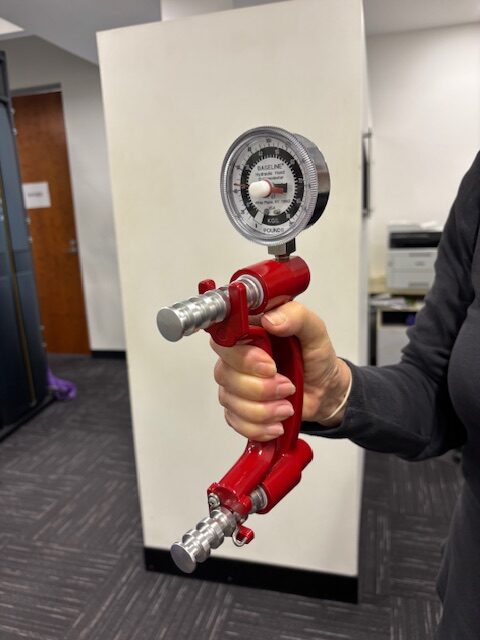
Your grip strength isn’t just about how strong your hands are, it’s a powerful sign of your overall strength and health. Grip strength naturally changes with age and differs between men and women, but when it’s lower than expected, it can make everyday tasks harder. Think opening jars, carrying shopping, or supporting yourself during a slip or fall. Low grip strength can be linked to:
- Reduced independence, muscle weakness and frailty as we age
- Higher risk of falls and injury
- Cardiovascular diseases (heart attack, stroke, heart failure, and hypertension), Type 2 diabetes, Chronic Obstructive Pulmonary Disease (COPD), Dementia
Physio uses a specific grip strength tool to measure grip strength. So, how strong should you aim to be?


Single-Leg Sit-to-Stand: Can You Get Up on One Leg?
Being able to stand up from a chair using one leg shows good leg strength, balance, and control. These are essential skills for everyday activities like:
- Standing up from a chair or car
- Gardening
- Getting on and off the floor
Struggling with this movement may increase your risk of falls or injury. For people wanting to run or play sport safely, being able to perform around 16 repetitions is a good benchmark for lower-body strength and control.
So, what is average?
Athletes or runners of any age: 16
Ages 12-49: 16+
Ages 50-69: 10+
Ages 70+: 5+

Single-Leg Bridges: Strong Hips, Better Movement
Single-leg bridges test the strength and endurance of your hips, glutes, and core muscles. These muscles help keep your pelvis stable when you:
- Going up and down stairs
- Walking on uneven ground
- Picking up suitcases
When they’re strong, they reduce extra strain on your lower back, hips, and knees.
Being able to complete around 20 single-leg bridges shows your body can maintain good control under load, which is important for preventing injury and moving confidently.
So, what is average?
Athletes or runners of any age: 20+
Ages 12-49: 20+
Ages 50-69: 15+
Ages 70+: 10+

Exercise Classes That Support Your Goals
For many people, improving fitness or losing weight is closely linked to managing old injuries.
Physio-led exercise classes provide a safe and supportive way to build strength, improve mobility, and boost fitness without aggravating problem areas.
These classes are suitable for all fitness levels and focus on:
- Strength and muscle support
- Balance and stability
- Low-impact cardiovascular exercise
- Moving with confidence and control
Not Sure Where You Stand?
If you’re unsure how your strength compares, or you want help building a strong, injury‑resilient body this year, a physiotherapy assessment can give you clear answers and a personalised plan that works for you.