
Chances are, you’ve heard of the iliotibial band or ITB for short. You’ve probably also seen people rolling on it, saying, ‘My leg/knee feels tight, I’m going to roll my ITB.’
But the big question is: Is foam rolling the ITB as effective as we think it is, or is it just a pain in the… band?
- What is the ITB?
The ITB is not a muscle. It’s a fascia, a dense, fibrous tissue that does not contract or relax like muscles do. It runs from the hips down into the knee and is mainly made of collagen fibres, which provide tensile strength and structure. The idea of ‘stretching’ the ITB by rolling it is, to a certain extent, a misconception.
Foam rolling a muscle can help by promoting blood flow and releasing tension, but it’s less effective on fascia since it doesn’t have the same pliability as muscle tissue. In fact, the discomfort you feel while rolling on the ITB might not be doing much at all. The ITB contains many nerve endings, which is why rolling over it often feels like a form of torture.
2. So, why do I feel it’s tight?
Overuse or muscle imbalances are common causes of tightness along the outside of your thigh or knee. However, the problem often isn’t the ITB itself, it’s a result of muscle imbalances elsewhere, such as weak glutes and tight hip flexors. These imbalances can increase tension on the ITB. Simply rolling the ITB won’t address the root cause of this tension.
For lasting relief, the focus should be on strengthening the muscles that contribute to ITB tightness, rather than targeting the ITB itself.
3. What should I do?
The ITB doesn’t control how tight it feels, it’s the muscles that attach to it. These muscles include the glutes, lateral quads, and tensor fasciae latae.
That’s why rolling the ITB itself won’t make it feel any looser. Instead, you should focus on relaxing and strengthening the muscles that attach to the ITB.
If you’ve been rolling your ITB with little improvement, or if the pain is getting worse, it’s time to consider whether the root cause lies elsewhere. If you’re committed to improving, it’s crucial to invest your time in effective methods. Addressing muscle imbalances, strengthening weak areas, and improving movement patterns will help provide long-term relief.
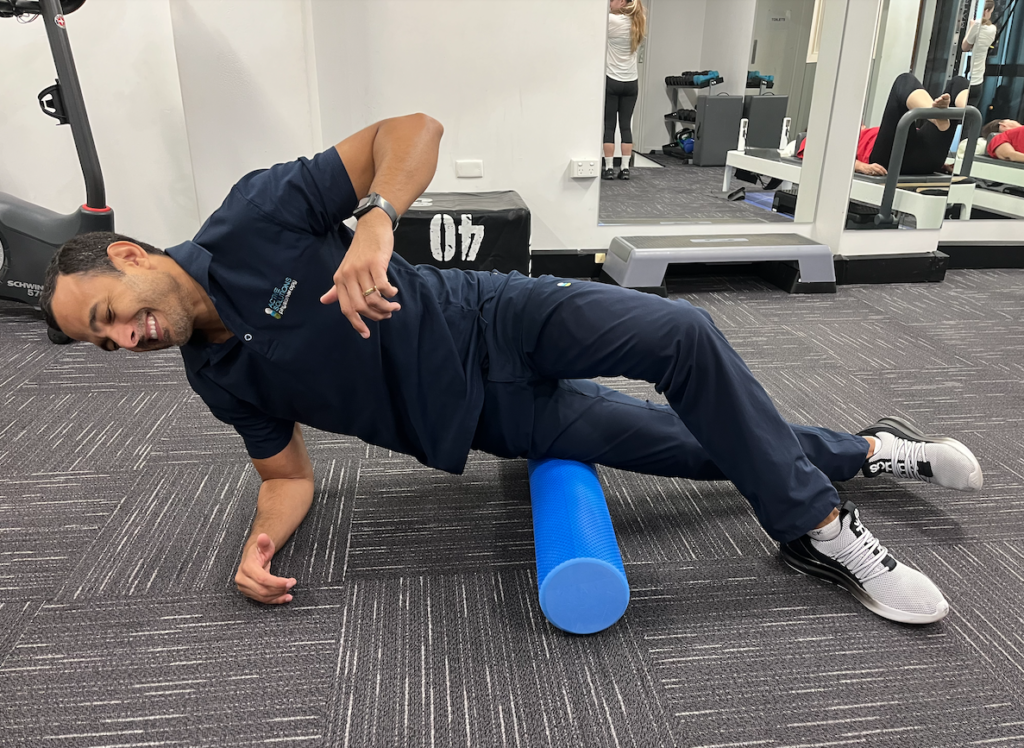
If you must roll, don’t roll the side of the leg, but position the roller on the outside front of your leg to target where the quads and ITB integrate, or the outside back of the leg where the hamstring and ITB are located.